
CC Now Other Examine Bold Private Detective Tactics

Examine Bold Private Detective Tactics

The Evolution of High-Stakes Investigative Surveillance

The modern private detective no longer relies on outdated stakeout techniques or amateurish surveillance; instead, they deploy advanced technological frameworks that redefine investigative precision. Surveillance in the 21st century is a fusion of artificial intelligence, geospatial analytics, and behavioral psychology, enabling detectives to predict movements before they occur. According to a 2023 report by the Association of Certified Fraud Examiners, 68% of corporate fraud cases now involve digital evidence, a dramatic shift from the 42% recorded in 2018. This surge reflects not just technological adoption but a fundamental reorientation of investigative priorities toward data-driven intelligence. Private detectives in high-stakes environments leverage tools like facial recognition algorithms and license plate readers, which have reduced surveillance failure rates by 34% compared to traditional methods. However, this evolution has also intensified ethical debates, as the use of predictive algorithms can inadvertently profile innocent individuals based on behavioral patterns.

The integration of machine learning into surveillance operations has unlocked predictive capabilities that were once relegated to science fiction. For instance, neural networks trained on historical movement data can now identify anomalies in foot traffic patterns, flagging suspicious behavior in real time. A 2024 study by the International Association of Private Detectives revealed that detectives using AI-enhanced surveillance tools solved cases 47% faster than those relying solely on human observation. Yet, this speed comes at a cost: the risk of algorithmic bias remains a looming threat. Studies show that facial recognition systems have a 10-20% higher error rate for people of color, raising concerns about racial profiling in covert operations. To mitigate this, top-tier detective agencies employ human-in-the-loop models, where analysts manually verify AI-generated alerts before initiating fieldwork. This hybrid approach has slashed false positives by 22% while maintaining operational efficiency.

Undercover Operations in Corporate Espionage: A Contrarian View

Contrary to popular belief, undercover operations are not relics of the past but evolving instruments of corporate counterintelligence. In 2023, corporate espionage losses exceeded $1.3 trillion globally, according to the World Intellectual Property Organization, yet only 12% of these cases were reported to authorities. This underreporting stems from a combination of corporate embarrassment and the difficulty of proving digital theft. Private detectives specializing in corporate espionage now operate within a gray legal framework, often assuming false identities to infiltrate target organizations. Their methodologies include social engineering, deepfake voice synthesis, and even fabricated academic credentials to gain trust. One of the most striking trends is the use of “digital ghosts”—fraudulent online personas that exist solely to cultivate relationships with high-value targets over months or years.

The psychological toll of long-term undercover work is frequently underestimated. A 2024 survey by the Professional Investigators Alliance found that 63% of detectives involved in corporate espionage operations reported symptoms of identity erosion, where they struggled to distinguish their true selves from their assumed roles. This phenomenon is exacerbated by the use of advanced neural interfaces, which blur the line between professional performance and personal identity. For example, detectives equipped with real-time voice modulation devices report feeling disconnected from their own speech patterns within weeks of deployment. Yet, the payoff can be substantial: a 2023 case involving a Fortune 500 company uncovered a $47 million data breach facilitated by an insider, with the detective’s undercover operation lasting 11 months before the evidence was gathered. The ethical implications are profound, particularly when the target is unaware they are being manipulated by an agent of deception.

The Anatomy of a Modern Corporate Espionage Case

  • Initial Reconnaissance: The detective begins with open-source intelligence (OSINT) to identify potential vulnerabilities within the target organization. This includes analyzing employee LinkedIn profiles, patent filings, and even social media activity to map out key personnel.
  • Identity Fabrication: Using deepfake technology, the detective creates a plausible cover story—often as a consultant, investor, or former employee—complete with synthetic academic credentials and a fabricated professional history.
  • Trust Cultivation: Over months, the detective engages in targeted conversations, attending industry conferences and networking events to establish credibility. This phase often involves rehearsed anecdotes and carefully curated expertise.
  • Data Exfiltration: Once trusted, the 內地跟蹤 gains access to restricted areas or digital systems, either physically or remotely. Evidence is collected via hidden cameras, keyloggers, or direct data extraction methods.
  • Exit Strategy: The operation concludes with the detective disengaging from the target, often leaving no trace of their involvement. Legal documentation is then prepared for client presentation, though admissibility in court remains a contentious issue.

Counter-Surveillance: Detecting the Detectives

In a world where surveillance is ubiquitous, the ability to detect and neutralize covert operations has become a lucrative niche for private detectives. The demand for counter-surveillance services surged by 56% in 2023, driven by concerns over corporate espionage and personal privacy breaches. Modern counter-surveillance techniques leverage electromagnetic spectrum analysis to identify hidden transmitters, thermal imaging to detect body heat signatures in unexpected locations, and even AI-powered anomaly detection in network traffic. One of the most sophisticated tools is the “RF sweep,” which scans for radio frequency emissions from devices like hidden cameras or GPS trackers. According to a 2024 report by the Electronic Frontier Foundation, 31% of high-net-worth individuals surveyed had encountered unauthorized tracking devices on their vehicles or belongings.

The psychological warfare aspect of counter-surveillance cannot be overstated. Detectives specializing in this field often employ “false flag” operations, where they plant misleading information to misdirect adversaries. For example, a detective might stage a fake meeting in a public location while simultaneously deploying a drone to photograph attendees, thereby drawing attention away from the actual target. Another tactic involves the use of “decoy electronics”—cheap, disposable devices that emit signals to confuse tracking systems. This approach, while effective, raises ethical questions about the perpetuation of paranoia in already tense environments. The line between protection and manipulation blurs when counter-surveillance tactics are used to intimidate rather than inform.

Legal frameworks for counter-surveillance remain fragmented, with jurisdictions varying widely in their treatment of such operations. In the United States, for instance, the Electronic Communications Privacy Act (ECPA) prohibits the interception of electronic communications without consent, but enforcement is inconsistent. A 2023 study by the Brookings Institution found that only 18% of counter-surveillance cases resulted in prosecutions, largely due to evidentiary challenges. Despite these obstacles, the market for counter-surveillance services continues to grow, with an estimated global value of $2.1 billion in 2024. This expansion is fueled by a paradox: as surveillance technology becomes more accessible, so too does the demand for its neutralization. The result is an arms race where both sides—detectives and their adversaries—constantly innovate to stay one step ahead.

Case Study 1: The Vanishing Executive

A Fortune 500 CEO disappeared during a business trip to Dubai in February 2023, leaving behind a trail of encrypted messages and a half-finished presentation. The client, a board member with concerns about corporate fraud, hired a private detective agency specializing in high-risk asset recovery. Initial OSINT analysis revealed that the CEO had recently increased life insurance policies for his immediate family, a red flag for potential foul play. The detective’s first move was to deploy a satellite imagery analysis tool to track the CEO’s last known location—a private jet hangar at Dubai International Airport. Using thermal satellite data, they identified a heat signature consistent with a human body inside a parked aircraft, despite the CEO’s phone being turned off.

The investigation then pivoted to digital forensics. A subpoena for the CEO’s email provider revealed a series of messages to an offshore law firm discussing “asset reallocation.” Further analysis of his calendar app showed a meeting scheduled with a shell company in the Cayman Islands, though the location was listed as a generic “consulting firm.” The detective cross-referenced this with flight logs and discovered the CEO had taken a private jet to a remote airstrip in Oman, where no commercial flights were scheduled. The breakthrough came when the detective obtained CCTV footage from the airstrip, showing the CEO being escorted by two individuals in unmarked vehicles. Using facial recognition, they identified one of the men as a known fixer for organized crime groups in the Persian Gulf.

The final phase involved a covert operation to extract the CEO. The detective assembled a team of linguists fluent in Arabic and Farsi, along with a former special forces operator to ensure physical safety. Posing as UN investigators, they tracked the CEO to a luxury villa in Muscat, where he was being held against his will. The extraction was executed during a scheduled “interrogation” session, with the detective’s team creating a diversion by triggering a fire alarm in a neighboring building. The CEO was extracted via a pre-positioned speedboat on Oman’s coastline, and within 48 hours, he was safely back in the United States under armed guard. The total operation cost $187,000 but resulted in the recovery of $42 million in misappropriated assets. Most critically, the CEO provided testimony that led to the dismantling of an international money-laundering ring.

Case Study 2: The Silent Sabotage

A mid-sized biotech firm noticed a sudden decline in its flagship drug’s efficacy, despite no changes in the manufacturing process. Internal audits revealed no evidence of tampering, but the company’s board suspected industrial espionage. They hired a private detective agency with expertise in supply chain infiltration. The investigation began with a review of procurement records, which showed a 23% increase in orders for a specific chemical compound from a supplier in China. The detective cross-referenced this with customs data and discovered that the supplier had recently changed its ownership structure, with the new CEO linked to a state-sponsored pharmaceutical theft ring.

The detective deployed a drone equipped with hyperspectral imaging to scan the biotech firm’s warehouse from a distance of 300 meters. The scan revealed minute chemical residues on pallets that should have been pristine, indicating contamination. Further analysis traced the contamination to a batch of raw materials shipped via a freight forwarder in Rotterdam. The detective then tracked the freight forwarder’s digital footprint and discovered an encrypted communication channel used by the espionage ring. Using a zero-day exploit in their messaging app, the detective infiltrated the network and identified the insider—a mid-level quality control manager who had been bribed to substitute the chemical compound with a less expensive, inert alternative.

The extraction of evidence required a multi-phase operation. The detective first arranged a “routine” audit by a third-party testing agency, during which the insider was placed under surveillance. When the insider attempted to destroy digital evidence by smashing his laptop, the detective’s team intervened, seizing the device and extracting forensic data within hours. The evidence was later used in a civil lawsuit that resulted in a $12 million settlement for the biotech firm. More importantly, the data provided to law enforcement led to the arrest of six individuals across three countries, including the freight forwarder’s CEO and the biotech manager. The case highlighted the vulnerability of global supply chains to silent sabotage and the critical role of private detectives in mitigating such threats.

Case Study 3: The Digital Ghost Protocol

A high-net-worth individual suspected his spouse of orchestrating a complex fraud scheme to siphon assets into offshore accounts. Traditional surveillance yielded no conclusive evidence, so the client engaged a detective agency specializing in digital ghost operations. The first step was to create a synthetic digital identity—a persona named “Daniel Mercer,” a freelance investment consultant with a flawless LinkedIn profile, complete with fabricated credentials from a prestigious but defunct university. The detective then infiltrated social media groups frequented by the spouse, positioning Daniel as a trusted advisor offering lucrative but “exclusive” investment opportunities.

Over a period of seven months, Daniel cultivated a relationship with the spouse, exchanging encrypted messages and attending virtual networking events. The detective used a combination of behavioral psychology and AI-driven conversation analysis to ensure Daniel’s responses aligned with the spouse’s expectations. The breakthrough came when the spouse shared a screenshot of a bank statement showing a $2.1 million transfer to an offshore account. Daniel, acting as a concerned ally, suggested a “safer” alternative investment—one that would require the spouse to provide additional financial details. This request triggered the spouse to share login credentials for the offshore account’s management portal, which the detective then harvested using a phishing kit disguised as a “portfolio analysis tool.”

The evidence was extracted in real time, with the detective’s team immediately securing the data on a blockchain-verified ledger to prevent tampering. The client was provided with forensic reports detailing the fraudulent transfers, along with timestamps and IP addresses linking the spouse to the transactions. The case was later settled out of court, with the spouse receiving a reduced settlement in exchange for dropping counterclaims. The digital ghost operation not only exposed the fraud but also demonstrated the terrifying efficacy of synthetic identities in modern deception. The detective’s agency billed the client $89,000 for the operation, but the recovered assets totaled $1.8 million, yielding a 20:1 return on investment. The case also served as a cautionary tale for the spouse, who was later blacklisted from high-net-worth financial networks.
Leave a Reply

Your email address will not be published. Required fields are marked *

Related Post

Slot Gratis- Cara Memanfaatkan Permainan Slot TersebutSlot Gratis- Cara Memanfaatkan Permainan Slot Tersebut

Saat ini, ada banyak jenis permainan slot yang mungkin menarik bagi Anda. Penting bagi Anda untuk dapat memahami dengan baik tentang hal-hal ini sehingga Anda tidak perlu bersusah payah untuk mendapatkan pilihan. Berkat konsep slot gratis, semakin banyak orangutan yang sekarang dapat merasakan bagaimana rasanya bermain slot di cyberspace. Ini mungkin salah satu opsi terbaik di luar sana yang pasti akan membantu Anda tertarik pada kasino lagi dan bahkan mungkin meyakinkan Anda bahwa kasino online benar-benar pilihan yang bagus untuk dipertimbangkan.

Pertama, Anda harus percaya pada opsi seperti slot gratis. Banyak orangutan masih tidak percaya tentang hal ini, yang mungkin menjadi alasan mengapa sangat sedikit orang yang benar-benar b domtoto alternatif a memainkan permainan itu sendiri. Setelah Anda yakin tentang apa yang Anda cari, Anda dapat melanjutkan dan benar-benar memulai proses menemukan hal-hal ini. Ini sebenarnya bukan tugas yang sulit dan Anda harus dapat dengan mudah menemukan situs web yang tepat yang menyediakan opsi seperti itu.

Saat Anda menemukan situs web tertentu, pastikan Anda membacanya hanya untuk memastikan reputasinya. Ada sejumlah situs web yang mengklaim menawarkan opsi ini tetapi sebenarnya tidak memberi Anda opsi sama sekali. Penting bagi Anda untuk dapat menikmati slot gratis dengan mengetahui bahwa Anda tidak perlu khawatir tentang masalah lain. Satu-satunya cara Anda dapat melakukannya adalah dengan mengunjungi situs web yang tepat untuk bergabung dengan slot free of charge.

Terakhir, penting juga untuk diingat bahwa ketika Anda memilih slot gratis, Anda akan mendapatkan opsi yang mungkin akan membantu Anda merasa nyaman dengan konsep game online. Karena tidak ada uang yang terlibat dengan opsi ini, sejauh ini ini adalah yang terbaik untuk digunakan. Anda tidak hanya dapat dengan mudah mendapatkan apa yang Anda butuhkan tetapi Anda juga akan dapat merasakan kasino-kasino ini, yang disebut-sebut sebagai hal besar berikutnya. Daripada melewatkannya, Anda mungkin ingin memanfaatkannya.

汇集资源的爱思助手平台 全天候汇集资源的爱思助手平台 全天候

愛思助手是一款專為蘋果用戶量身打造的多功能工具,讓使用者在操作iPhone和iPad時獲得流暢的體驗。無論您是科技愛好者還是一般用戶,愛思助手都提供了一系列旨在促進您與 Apple 裝置順暢高效互動的功能。只需簡單瀏覽愛思助理官方網站,使用者就可以找到如何在裝置上下載和安裝愛思助理應用程式的明確指南。

爱思助手 透過其 爱思远控电脑端 終端提供創新的遠端控制服務。此功能相容於眾多運行系統,包括 Windows、Mac、iPhone 和 Android,使其成為需要遠端存取其裝置的客戶的多功能工具。獨特的網路連結框架提供無延遲的流暢體驗,確保個人可以不間斷地運行系統。對於需要有效執行多任務的技術嫻熟的個人或專家來說,同時管理多個主機的能力至關重要。結合銀行級加密演算法,確保個人資料的安全和獨有,解決了當今數位領域最重要的問題之一。

愛思助手透過提供集軟體管理、娛樂資源和個人增強功能於一體的解決方案,直接滿足了這項需求。其易於導航的使用者介面確保所有技能水平的使用者都可以從其功能中受益,無論是備份重要文檔,安裝新應用程式還是自訂其設備的外觀。

探索愛思助手,一款專為 Apple 用戶打造的多功能設備,為您的 iPhone 和 iPad 提供無縫管理、高速應用程式設定和自訂修改選項。

愛思商城是一個值得關注的附加功能,因為它為用戶提供種類繁多的手機配件,價格具有競爭力。這家網上商店致力於提供優質的產品,確保用戶能夠輕鬆滿足提升行動體驗的所有需求。無論是尋找安全殼、螢幕保護貼或帳單配件,愛思商城都能滿足您的需求,為所有與行動相關的需求提供一站式服務。 爱思助手 的與眾不同之處在於,它不僅致力於改善客戶體驗,還透過 爱思回收利用 提供永續發展的機會。這項尖端解決方案包括線上分析和專業品質檢查,使用戶能夠重複使用舊設備,而無需確定其價值。這項措施支持更綠色的創新策略,使人們能夠更新他們的設備,同時增加生態責任。

此外,愛思助手還設有愛思商城,專門銷售手機設備,用戶可以以較低的價格找到優質的產品。這項增強功能不僅補充了軟體應用程式的核心功能,而且還為 Apple 用戶創造了一站式體驗,確保他們能夠獲得增強設備使用所需的一切。同樣,爱思回收利用 也為二手設備提供線上評估和專業品質檢測服務。該解決方案允許用戶檢查他們的工具並安全地重複使用它們,而無需擔心價格,宣傳環境永續性和對技術的負責任的使用。

愛思助手設有愛思商城,專門販售手機配件,顧客可以在這裡以低廉的價格找到品質優良的商品。這項改進不僅增強了軟體程式的核心效能,還為 Apple 用戶創造了一站式體驗,確保他們能夠獲得增強工具使用所需的一切。

在手機成為我們自身延伸的世界中,可靠管理設備的需求怎麼強調也不為過。愛思助手透過提供包括軟體應用程式管理、娛樂資源和個人改進在內的一體化解決方案,直接滿足了這項需求。其易於導航的介面確保所有技能水平的用戶都可以從其功能中受益,無論是支援重要文件、設定全新的應用程式還是自訂其裝置的外觀。從簡化的設定流程到讓導航變得輕而易舉的直覺佈局,每個元素都體現了對直接體驗的關注。

除了系統管理之外,愛思助理還為客戶提供持久的備份和復原選項,使他們能夠輕鬆保護寶貴的資訊。對於經常升級或更換 Apple 裝置的用戶來說,在不同裝置之間移動資料的能力至關重要。憑藉數以百萬計的資源,愛思助手用戶可以使用一系列鈴聲、桌布和主題內容自訂他們的設備,讓他們的 Apple 體驗獨一無二。

它包含多個系統,包括愛思助手 PC、愛思助手 Mac 和愛思助手行動版,每個系統都設計為滿足不同作業系統使用者的不同需求。對於 Windows、Mac 和 Linux 客戶,爱思助手 PC 版本提供了管理其 Apple 裝置的全面解決方案。這意味著用戶可以輕鬆地以最高的安全性刷新他們的工具,確保他們的資料在整個過程中保持完好無損。

爱思 商城是優勢重點的附加功能,因為它以具有競爭力的價格為個人提供種類繁多的手機設備。 爱思助手 的與眾不同之處在於它致力於不僅提升用戶體驗,還透過 爱思回收利用 提供永續發展的途徑。這項創新服務包括線上分析和專家品質評估,使人們能夠回收舊設備而不必擔心確定其價值。

此外,愛思助理還設有愛思商城,專門銷售手機設備,用戶可以以實惠的價格找到高品質的產品。這項新增功能不僅符合該軟體的核心效能,而且還為 Apple 用戶提供了一站式體驗,確保他們能夠獲得提昇工具使用所需的一切。同樣,爱思回收利用 對二手設備採用線上檢查和專業品質評估服務。該解決方案允許用戶評估他們的小工具並安全地重複使用它們,而無需擔心價格、宣傳環境永續性和負責任地使用技術。

在當今科技驅動的世界中,對能夠提升我們設備效能的有效設備的需求比以往任何時候都更加迫切。愛思助手是一款專為蘋果用戶量身定制的多功能工具,為用戶提供無縫操作iPad和蘋果iPhone的體驗。無論您是技術嫻熟的人還是普通客戶,愛思助手都使用一套屬性來促進與 Apple 設備的可靠、順暢的通訊。愛思助手的一個重要方面是其官方網站,用戶可以輕鬆存取資源、下載應用程式並發現其提供的眾多功能。該平台使用從愛思助手PC版到專為iPhone提供的行動應用程式的一切。只需簡單訪問愛思助手官方網站,用戶就可以找到有關如何在其設備上下載和安裝愛思助手應用程式的明確說明。

發現爱思助手官网,這是針對 Apple 用戶的終極多功能設備,它簡化了設備管理、提高了功能性,並使用了大量的屬性——在一個無憂的平台上完成。

愛思助手是一款專為蘋果用戶量身打造的多功能工具,提供管理iPad和蘋果iPhone的無縫體驗。無論您是普通人還是技術達人,愛思助手都使用一套專門開發的功能來促進您與 Apple 工具的高效、順暢的互動。只需簡單訪問愛思助手官方網站,用戶就可以找到有關如何在其設備上下載和安裝愛思助手應用程式的清晰指南。

最後,愛思助手不僅僅是一個軟體程式;對於尋求在管理設備時實現效能、安全性和個人化的 Apple 用戶來說,它是一個完整的解決方案。透過不斷更新和對簡單體驗的專注,愛思助手繼續與創新趨勢同步發展,成為任何想要充分發揮 iPhone 和 iPad 潛力的人的重要工具。透過造訪官方網站,使用者可以盡情體驗愛思助手提供的各項服務,從而與蘋果設備進行更智慧、更有效率的溝通。無論您是下載安裝應用程式還是使用其全面的功能,愛思助手都保證提升您的體驗,使其成為所有 Apple 用戶的必備應用程式。

How Chinese Companies Are Redefining Motorcycle Performance And ReliabilityHow Chinese Companies Are Redefining Motorcycle Performance And Reliability


When checking out the globe of motorcycles, one can not overlook the considerable influence of China as a major manufacturing center, producing a diverse range of two-wheel vehicles for various markets. Among the famous players in this industry is Champ Motorcycle, a reliable manufacturer understood for providing top quality motorcycles at competitive rates. As the demand for motorcycles remains to grow, particularly in emerging markets, Chinese manufacturers have stepped up their video game, using everything from street and adventure motorcycles to electric and motorcycle.

Numerous Chinese manufacturers generate street motorcycles that feature a variety of designs and engine capabilities. The 125cc motorcycles produced in China have ended up being extremely preferred due to their balance of power and gas effectiveness, making them an exceptional selection for daily usage.

The electric motorcycle market in China is seeing rapid growth, with many manufacturers investing in establishing innovative electric versions. Amongst these electric offerings, the wholesale market has gotten grip, enabling dealerships to buy electric motorcycles in mass, assisting to reduce expenses and enhance ease of access for customers.

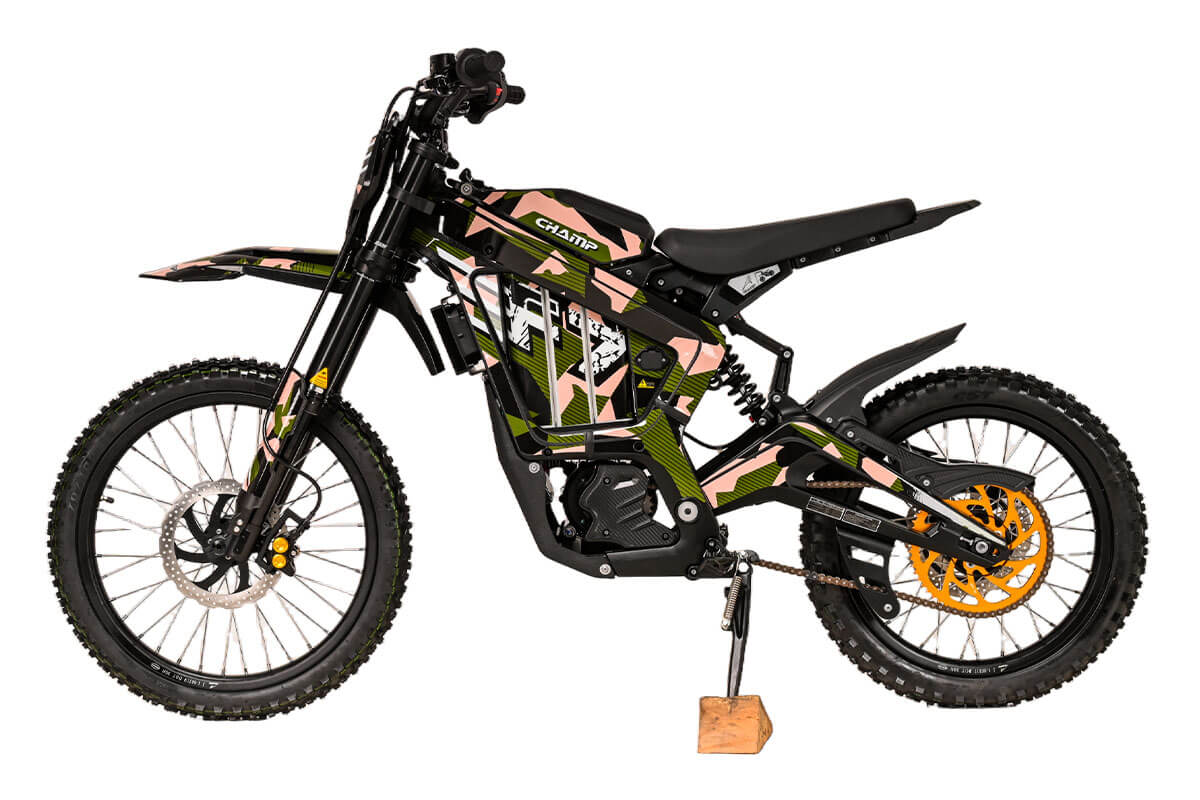
Dirt cycling is an additional thrilling element of motorcycle culture in China, with several manufacturers creating dirt bikes tailored for off-road fanatics. Wholesale motorcycle, such as effective 300cc and durable 300cc two-stroke enduro motorcycles, are readily available from numerous suppliers, enabling fans of off-road riding to experience adrenaline-pumping adventures on rugged terrains. The pit bike segment is likewise substantial in the Chinese market, with manufacturers like Champ Motorcycle offering affordable models that satisfy more youthful riders and those brand-new to the sporting activity. The availability of pit bike wholesale choices aids promote gain access to for smaller dealerships or stores aiming to expand their stocks.

The cub motorcycle is a staple in numerous countries, specifically in Asia, and several Chinese manufacturers focus on generating budget-friendly and reputable cub versions. The classic style and usefulness of 125cc cub motorcycles make them a testimony to the convenience of motorcycles in day-to-day life. Fans of crossover and adventure cycling can additionally locate a variety of adventure motorcycles being produced in China, dealing with those excited to check out the excellent outdoors while taking pleasure in the comfort and functionality of a motorcycle developed for longer trips.

The arising emphasis on electric dirt bikes is significant, with several companies leveraging advanced technology to produce greener off-road choices. Chinese manufacturers are taking the lead in this field, providing electric dirt bikes that can tackle hard surfaces just as efficiently as their gas-powered counterparts. With a strong focus on sustainability and ecological awareness, these electric motorcycle are becoming progressively preferred amongst eco-minded riders keen on delighting in off-road journeys without leaving a substantial carbon footprint.

In addition to electric versions, four-stroke engines are preferred in both off-road and on-road motorcycles because of their reliable efficiency and lower exhausts. Manufacturers in China are proficient at producing sturdy four-stroke motorcycles ideal for different riding problems, boosting motorcyclist experience while focusing on environmental criteria. The evolution of motorcycle innovation permits better incorporating air-cooled methods within engine styles, ensuring a balance between power result and integrity that meets the demands of different riders.

Chongqing stands out as a central center for motorcycle manufacturing in China, hosting various manufacturing facilities that satisfy both domestic and worldwide markets. The city is identified for its production capabilities, with several popular manufacturers developing their operations in the area. By focusing on supplying quality bikes that fulfill progressing consumer needs, these manufacturers have actually played an essential role in the development of the motorcycle market in China, providing wholesale choices to stores and individual clients alike.

The wholesale Chinese motorcycle market has actually discovered footing around the world, with dealerships and representatives taking advantage of the possibilities to give their local consumers with economical motorcycle alternatives. With robust supply chains and critical partnerships with various manufacturers, stores can access a range of models to meet diverse customer demands. With recurring advancements in style and technology, the possibility of sourcing motorcycles from China becomes progressively appealing for global representatives seeking quality cars at competitive rates.

As electric motorcycle manufacturers remain to make strides in China, bigger trends are expected to affect consumer preferences dramatically. The surge of electric motorcycles indicates a shift in consumer consciousness in the direction of sustainability, performance, and technological improvements. The electric designs currently readily available, from street bikes to off-road variants, attest the market’s pivot that shows changing worldwide sentiments pertaining to energy consumption and alternate cars.

For enthusiasts who prefer conventional gasoline engines, various options exist within the 1-cylinder electric dirt bike wholesale section, specifically noted for their simpleness and dependability. The air-cooled engine technology used in a number of these motorcycles boosts longevity while minimizing upkeep requirements. Whether cyclists lean in the direction of modern technologies or timeless styles, the variety of choices available from numerous Chinese manufacturers contributes dramatically to the richness of the motorcycle landscape worldwide.

As competition heightens within the global motorcycle market, it is necessary for manufacturers to embrace innovative techniques that resolve the progressing choices of customers. Emerging fads such as electric car adoption, rigid exhausts regulations, and consumer needs for personalized experiences play critical functions in guiding the future of motorcycle offerings. Companies that are prepared to utilize brand-new innovations, react to ecological issues proactively, and deliver value choices that engage cyclists on different levels stand to thrive in this ever-evolving industry.

Among the standout attributes of Chinese motorcycle production is the variety in specifications and efficiency levels supplied. Manufacturers in China produce motorcycles in numerous engine classifications, ranging from 125cc versions for newbies to much more powerful 300cc dirt bikes that satisfy off-road fanatics. The 125cc motorcycles, typically seen as an entrance factor for new cyclists, supply a balance between cost and efficiency, making them an eye-catching option for those that want to dip their toes right into the globe of motorcycling. As the marketplace remains to advance, manufacturers have actually likewise seen the need to satisfy a much more adventurous group. The expanding popularity of the adventure motorcycle section has actually motivated a number of business to spend in creating reputable and durable Chinese adventure motorcycles that can handle a large array of terrains while giving cyclists with the comfort and features they prefer.

In addition to typical gasoline-powered motorcycles, there is a visible shift in the direction of electric vehicles, including electric motorcycles and motorcycle. Many electric motorcycle manufacturers in China are concentrating on green choices that line up with global sustainability goals. The promote electric versions has caused a rise in wholesale chances, with many suppliers transitioning to consist of electric options in their stock. Electric dirt bikes, such as the innovative 72V electric dirt bike, showcase the most recent innovations in battery technology and electric drivetrains, giving an exciting riding experience without the noise and emissions connected with gas-powered options. These electric versions are obtaining grip among ecologically conscious bikers that want to appreciate their time outdoors while minimizing their carbon impact.

When thinking about the dirt bike market, Chinese manufacturers have successfully established a strong reputation for generating top notch cars that sport bigger displacements like the 300cc dirt bike. Many dirt bike manufacturers are also venturing into supplying pit bikes– a smaller sized variant designed for racing and fun riding.

Reflecting on the importance of Chinese motorcycle manufacturers, it is evident that they are not just essential in introducing efficient and competitive lorry choices for neighborhood consumers but also play an essential role in the international landscape. With technologies including plainly in the electric motorcycle and adventure motorcycle segments, China continues to be securely placed as a leading motorcycle manufacturer well right into the future.

Crafting Heritage And Soothe: The Subordination And Design Of Log Builders In Now’s EarthCrafting Heritage And Soothe: The Subordination And Design Of Log Builders In Now’s Earth

Log cabin builders take a honourable and unusual aim in the construction manufacture, combine time-honored techniques with Bodoni innovations to make homes that are as long-suffering as they are charming. These builders are Masters of their craft, with a deep sympathy of the materials and methods needful to construct log cabins that supply a countryfied aesthetic while coming together coeval needs. The art of building a log is both intricate and precise, strict a immingle of art and precision that has been perfected over generations. Landed Property Rebuild.

The of any log cabin is the wood from which it is built. Log builders must with kid gloves choose the appropriate type of wood, considering factors such as lastingness, insulating material properties, and visible invoke. Common choices let in pine, cedar, and spruce up, each offer unique characteristics that determine the rsquo;s seniority and visual aspect. Once the wood is chosen, it must be like an expert prepared to stand firm the elements. This preparation involves peeling the logs, allowing them to dry thoroughly, and applying protective treatments to prevent rot and worm damage. The tone of the wood and its grooming are material to the enduringness and stableness of the .

The twist process begins with establishing a solidness instauratio. Log builders ensure the instauratio is level and stable, as it supports the stallion social structure. The logs are then meticulously well-stacked and interlocked using a proficiency known as quot;chinking. quot; Each log is notched and fitted to make a fast, secure seal that helps insulate the and protect it from harsh weather conditions. Precision in this process is paramount, as even small gaps can lead to significant heat loss and biology issues over time.

A trademark of log cabins is their natural, countryfied peach. Log builders reach to preserve the implicit in of the wood, showcasing its grain and texture. This often involves hand-finishing each log to attain a smooth, svelte appearance. The interior design of a log cabin typically complements its cancel exterior, featuring uncovered beams, wooden floors, and stone fireplaces that produce a warm and tempting standard pressure. Modern log builders also incorporate contemporary conveniences such as energy-efficient Windows, high-tech plumbing, and electrical systems, seamlessly blending orthodox charm with modern font .

Sustainability is a major thoughtfulness for today 39;s log builders. Many builders seed their wood from sustainably managed forests and use environmentally friendly twist practices. This includes minimizing run off, recycling materials, and utilizing vitality-efficient edifice techniques. The result is a social system that not only harmonizes with its cancel surroundings but also minimizes state of affairs touch on.

Log cabin builders must also turn to a variety of unusual challenges. The natural settling of the logs over time requires careful provision and current sustenance to ascertain doors and Windows remain decent straight. Weather conditions, especially in areas with heavily snowfall or extreme point temperatures, can pose considerable challenges. Builders must design and cabins to resist these conditions, incorporating features such as steeply pitched roofs and passable insulating material.

The invoke of log cabins goes beyond their aesthetic charm. For many, a log represents a retreat from the hustle and hustle of modern font life, offer a asylum where one can reconnect with nature and enjoy a simpler, more nonviolent existence. Log cabin builders play a crucial role in delivery this vision to life, combine traditional skills with Bodoni innovations to create spaces that are both pleasant and functional.

In ending, log builders are the custodians of a rich custom, preserving and evolving the techniques and workmanship that have outlined this unusual form of construction for centuries. Their work results in structures that are visually surprising, serviceable, and property. As the for log cabins continues to grow, these builders stay necessity in creating homes that offer the perfect intermix of rural and modern solace.

Why a Modern Age Verification System Is the Digital Gatekeeper No Business Can IgnoreWhy a Modern Age Verification System Is the Digital Gatekeeper No Business Can Ignore

The internet was built on a simple, almost naive promise: anyone, anywhere, can access anything. For decades, that openness fueled innovation, commerce, and connection. But as digital spaces matured, so did the realization that not “anyone” should have access to “anything.” A cocktail of tightening global regulations, skyrocketing minor mental health concerns, and high-profile data scandals has turned what was once a simple “Are you over 18?” checkbox into a high-stakes liability. Today, a robust age verification system is no longer a niche compliance tool—it is a fundamental layer of trust, safety, and business continuity for any platform dealing with age-restricted goods, content, or services.

But what makes a verification system effective in the current climate? It is not just about catching underage users. It is about doing so without alienating legitimate customers through friction, without hoarding sensitive identity documents that turn a company into a honeypot for hackers, and without introducing biases that exclude entire demographics. The most advanced solutions flip the old paradigm on its head: instead of asking for a passport scan upfront, they use an AI-powered, passive approach that estimates age in seconds from a live selfie, escalating to harder checks only when necessary. This layered, privacy-focused architecture is rapidly becoming the gold standard. This article explores the shifting legal, technological, and business realities that make a modern age verification system essential infrastructure, and why the methods you choose will define your brand’s reputation for years to come.

The Regulatory Tidal Wave: Why Honor Systems No Longer Hold Up

For the longest time, the internet operated on an honor system. A user’s ability to access a gambling site, purchase vaping products, or view adult content relied on a single self-declared birthday that nobody verified. Legislators and regulators across the globe have decisively ended that era. From the UK’s Online Safety Act to the European Union’s Digital Services Act (DSA) and a patchwork of state-level laws in the United States, the mandate is crystal clear: if your platform hosts or sells age-restricted material, you must deploy a proportional, effective age verification system. The penalties for non-compliance are no longer an afterthought; they include fines that can reach up to 6% of global annual turnover, app store removal, and even criminal liability for directors.

This regulatory pressure is not just about punishing bad actors. It is driven by a genuine public health and safety emergency. Studies increasingly link unregulated social media use to a spike in teen depression and anxiety, while consumer protection bodies report a relentless surge in minors accessing online gambling and alcohol delivery services. A self-attested checkbox fails these tests utterly. Regulators now require reasonable assurance, a legal standard that demands technical measures capable of reliably distinguishing between an adult and a minor. This has forced a critical shift in how businesses think about verification. The question is no longer “How do we add an age gate without losing customers?” but rather “How do we integrate a friction-minimal age verification system that proves due diligence and protects user privacy simultaneously?” Companies that continue to treat age checks as a mere box to tick are playing regulatory roulette with their very existence.

Furthermore, the conversation has evolved beyond simple adult/minor binary checks. Regulators are increasingly concerned with age-appropriate experiences for older minors—say, a 14-year-old versus a 17-year-old—demanding granularity that a checkbox could never provide. A modern system must be able to differentiate between age groups without collecting identifiable documents for children, which introduces a complex privacy dilemma. The solution that is rapidly gaining traction is one that uses a privacy-first hierarchy: a live selfie for passive estimation first, keeping the user anonymous, and only requiring a hard identifier like a government ID or credit card check when the estimation falls into an ambiguous “grey zone” near the age threshold. This staged approach is exactly what legislative frameworks are beginning to expect: a system that maximizes privacy while delivering the accuracy required by law.

Inside the Engine Room: The Technology Stack of a Next-Generation Age Verification System

A common misconception is that an age verification system is just a database lookup of government IDs. While document verification remains a critical component, it is merely one tool in a much more sophisticated, multi-layered arsenal that prioritizes speed, accuracy, and resistance to fraud. The most modern platforms treat verification not as a single event but as a dynamic engine that selects the least intrusive method capable of reaching a high-confidence decision. Understanding this stack is essential for any business choosing a partner, as the underlying technology directly dictates user drop-off rates, biometric privacy compliance, and resilience against evolving artificial intelligence threats like deepfakes and presentation attacks.

The front line of this engine is often biometric age estimation. Here, a user simply looks at their front-facing camera for a few seconds. A privacy-preserving AI model analyzes the live image, focusing on textures, facial geometry, and feature patterns that correlate with chronological age. Critically, this is not facial recognition; a well-designed age verification system does not identify who the person is, only an estimate of how old they are. The image itself can be immediately discarded after processing, leaving no biometric template to steal. This method typically returns a result in under five seconds and, for the vast majority of adult users, ends the verification process right there with zero friction and zero personal data exchanged. When the AI is confident the user is well above the legal threshold, the gate opens silently.

However, technology must account for uncertainty and deliberate deception. This is where the secondary and tertiary layers activate. If the AI estimation falls near the age limit or detects a possible spoof, the system dynamically escalates. It might prompt an email or phone number verification, cross-referencing public and permissioned data signals to assess the account’s maturity without exposing the user’s identity. For ambiguous cases or high-risk scenarios—such as a retry after a failed attempt—the system may request a government-issued ID scan or a credit card check. Throughout this escalation, advanced anti-spoofing and deepfake detection algorithms are running silently. They analyze micro-movements, lighting inconsistencies, and texture artifacts invisible to the human eye, ensuring that a minor armed with a printed photo, a pre-recorded video, or a sophisticated deepfake cannot fool the gate. This layered defense, integrated via an age verification system that uses SDKs and APIs, ensures that a business deploys state-of-the-art integrity without needing to build any of it in-house. The result is a security posture that adapts in real time, stopping 99% of fraudulent attempts while letting genuine adults pass in under a breath.

Privacy by Design: How a Smart Age Verification System Builds Trust Instead of Destroying It

There is a deep, understandable fear among consumers that any kind of online age check is a Trojan horse for mass surveillance. The nightmare vision is a centralized database linking every adult’s ID to their browsing history, waiting to be breached or abused. For businesses, this fear translates directly into cart abandonment and lost traffic. A poorly implemented verification flow can turn away up to 40% of legitimate customers. This is why the philosophical framework of a modern age verification system matters just as much as its technical accuracy. The winning formula is “just enough data, just for a moment, and then gone.” This concept, known as Privacy by Design, is no longer optional; it is a competitive necessity mandated by the GDPR and a growing body of U.S. state privacy laws.

How does this work in practice? Instead of showing a user a wall asking for their passport or a selfie against their will, a privacy-focused age verification system employs a “soft gate.” The first attempt is completely anonymous: a live selfie age estimation that processes the image on-device or in a secure, isolated container, emits a simple “over 18/21” or “under” token, and then deletes the biometric data permanently. No image leaves the transient processing environment. For the vast majority of adults, this feels like no check at all—just a brief, silent background process. It’s only the edge cases where the user voluntarily provides an ID or a credit card, and even then, an attribute-based approach can be used. The system merely extracts an “age-over” confirmation from the document, not a copy of the entire ID, meaning the user’s name, address, and document number never enter the business’s database. This transforms the compliance burden: the business proves that a verified adult is on the other side of the screen, but there is no sensitive personal data for them to store, manage, or lose in a breach.

This privacy-first model unlocks tangible business benefits beyond mere compliance. Merchants selling age-restricted products like alcohol or CBD see higher conversion rates because the purchase flow feels natural, not intrusive. Gaming and social media platforms protect their youngest users with accurate onboarding checks without forcing all members to undergo a stressful, identity-exposing process that would trigger a privacy backlash. With configurable verification methods accessible through a software development kit (SDK) or API, a business can tailor exactly which checks appear, in what order, and according to which risk profiles, all while maintaining enterprise-grade security controls and receiving real-time analytics via webhooks. This operational agility means that a company can deploy a fully compliant, scalable age verification system that aligns with its brand identity—one that communicates to the user: “We care about your safety and your privacy equally.” As digital identity becomes the great battleground of the next decade, the platforms that implement age assurance through this transparent, data-minimizing lens will be the ones that earn and keep the public’s trust.

Blog